How to make a personal pet portrait of your dog or cat
A pet portrait lives or dies by one photo. A lot can be done from a single picture, but a face that isn't in the frame can't be recovered. Here's what actually makes the difference.
What makes a good source photo
Daylight beats everything. A window during the day is enough. Avoid harsh backlight, and avoid flash: flash flattens colour and lights up the eyes, and that carries straight through.
Get close, and get down to eye level. Photos taken standing and pointing down give a huge head and a vanishing body. Crouch, and the portrait will look like your animal.
The face needs to be sharp and unobstructed. Both eyes visible, no hand, lead or furniture edge across the muzzle. A calm background helps — not because it gets used, but because the animal stands out more clearly.
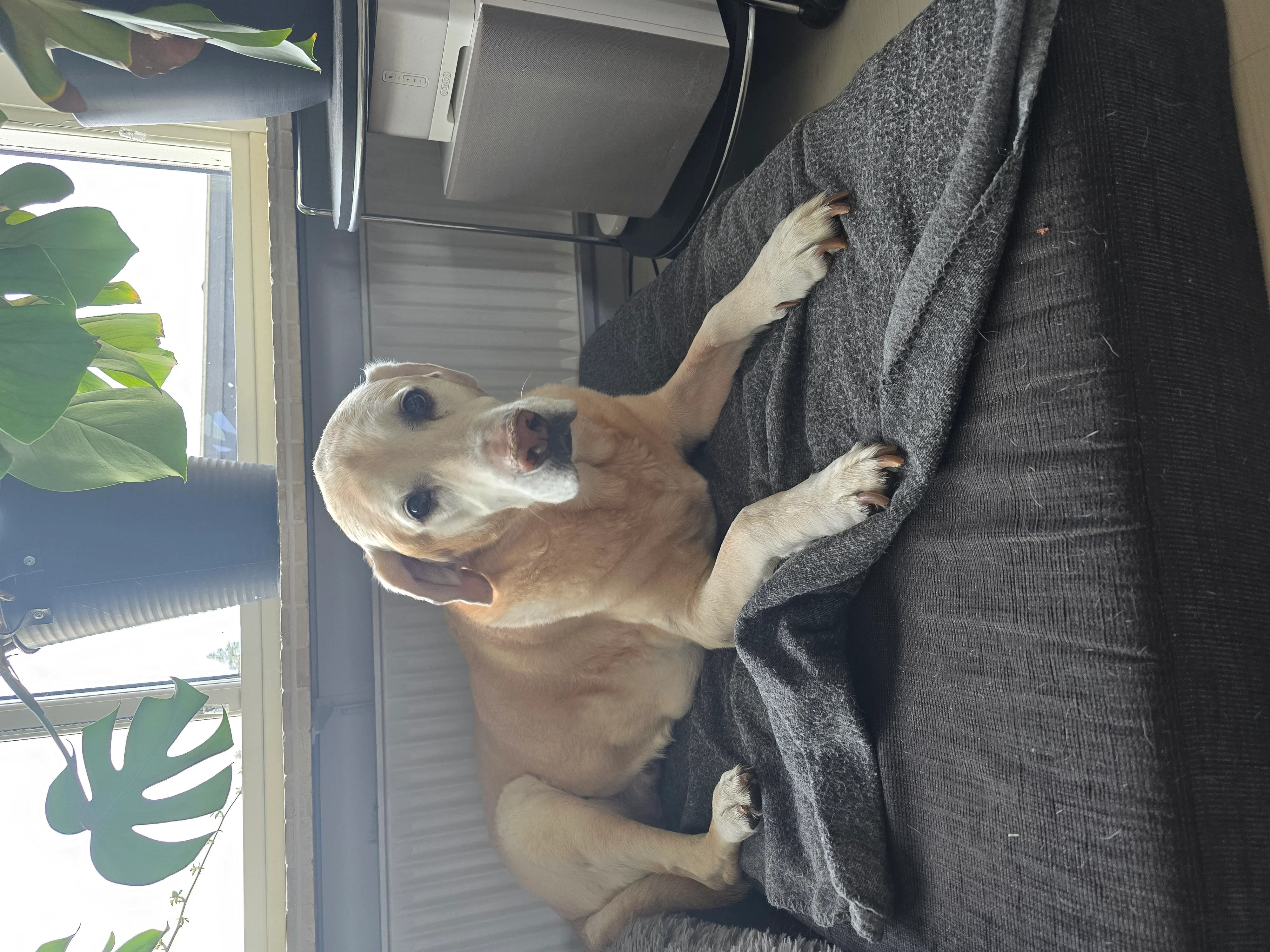
An example of a usable photo: daylight from the side, the animal settled, head turned slightly towards the camera and the whole face visible.
Dogs and cats are not photographed the same way
Dogs will usually look at you if you wait. Use that: say the name once and take the picture the second the ears go up. Long muzzles work best turned slightly, so the profile doesn't flatten.
Cats rarely look on request. The easiest shots are from above while they're sitting, or while they're lying and watching out of a window. Dark cats need more light than people expect — otherwise the features disappear into a black silhouette.
Which scenes work?
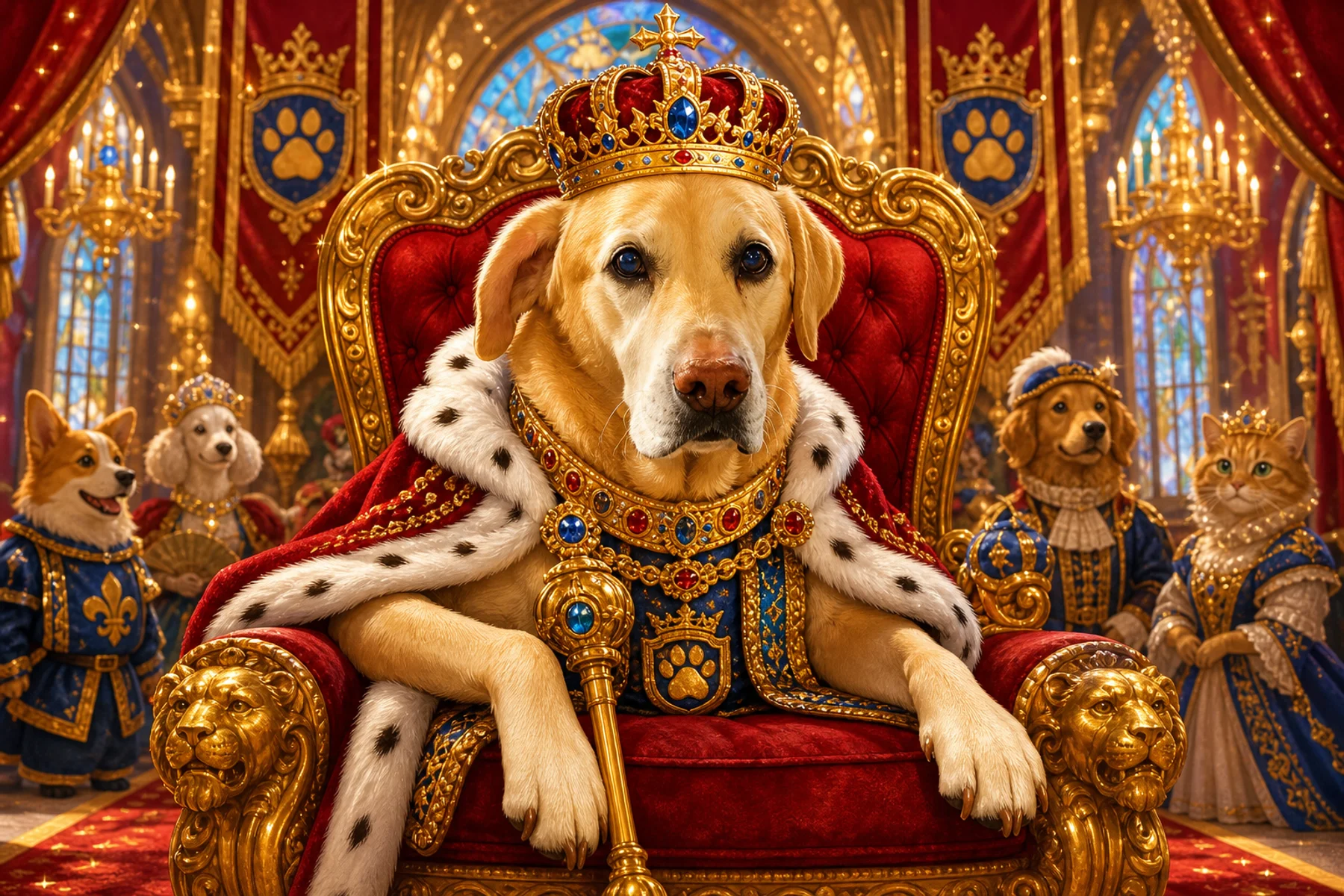
The best scenes are the ones where the animal's own personality suits the role. A heavy, dignified labrador as a king. A disgruntled cat as a judge. A hyperactive terrier in the middle of something about to go wrong. Pick the scene from the animal, not the other way round.
You can pick a ready-made experience from the catalogue or describe your own idea in your own words. The options are on the pet portrait page.
How is it different from an ordinary photo?
A photo shows how the animal looked that day. A caricature portrait exaggerates what makes it recognisable — the angle of the ears, the expression, the crooked patch — and places it in a scene that doesn't exist. That's why it works as a gift: it's obviously that animal, and just as obviously not a photograph.
It also means a portrait isn't documentation. If you need an accurate picture of the animal, you need the photograph.
Digital file or print?
A digital file is right if the image is for online use, for sharing around the family, or for printing at your own photo shop. A print or framed print is right if it's going on a wall — and as a gift, a physical object is harder to forget.
Sizes and current prices are on the pricing page. You always see the result for free first, so there's time to pick a different photo if it doesn't land.
If you already have a good photo of your dog or cat, you can try it here.
Ready to try it yourself?
Upload your photo and get a fun AI caricature in under a minute.
Make my caricature →